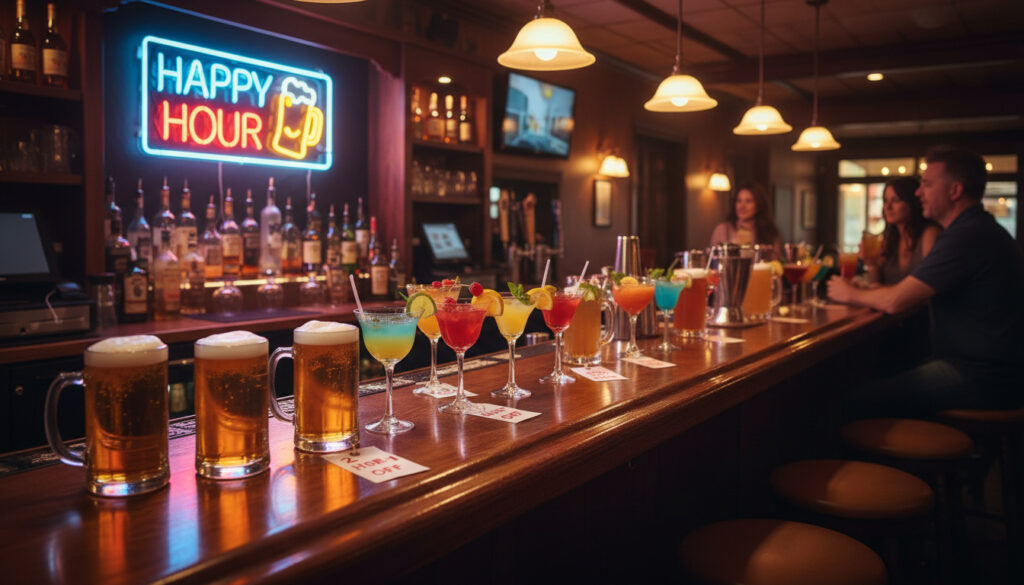
Happy Hour Near Me – Parhaat Tarjoukset Lähelläsi
Finding Value in Local Evening Promotions
The search for happy hour near me extends beyond simple discount hunting into the realm of urban exploration and social timing. Paikalliset ravintolaoppaat reveal significant variation in how establishments structure these promotional windows, with offerings ranging from modest beer discounts to elaborate tasting menus designed to attract after-work crowds.
Understanding the local landscape requires recognizing that “happy hour” encompasses diverse formats depending on neighborhood demographics and licensing restrictions. The concept originally emerged from United States naval traditions before evolving into the commercial staple familiar in metropolitan areas worldwide.
Venue Categories and Atmospheric Variations
Neighborhood Public Houses
Traditional pubs typically emphasize draft beer rotations and casual fare, creating environments suited for informal professional networking. These establishments often maintain consistent daily schedules, frequently running from 16:00 to 18:00 to capture the post-employment transition period.
Cocktail-Focused Lounges
Mixology-oriented venues leverage happy hour periods to introduce experimental beverages at accessible price points. Industry data suggests these promotions significantly increase trial rates for new menu items among demographics typically resistant to full-price experimentation.
Restaurant-Integrated Bars
Dining establishments utilize promotional drink pricing to reduce perceived wait times for tables, transforming bar areas into revenue centers rather than transitional spaces. The integration of food requirements with alcohol discounts varies based on regional regulatory frameworks.
Contemporary Market Evolution
Promotional scheduling has diversified considerably beyond the traditional late-afternoon window. Reverse happy hours operating after 21:00 target service industry professionals and night owls, while weekend brunch extensions cater to social groups seeking value-conscious leisure activities outside conventional time constraints.
Digital integration now allows dynamic pricing models, where establishments adjust discount levels based on real-time occupancy data. This optimization creates fluctuating value propositions that reward flexible patronage patterns.
Comparative Format Analysis
| Operational Model | Temporal Structure | Primary Offerings | Target Demographic |
|---|---|---|---|
| Traditional Fixed | – weekdays | House beer, well drinks | Office workers |
| Extended Leisure | – | Wine selections, shared plates | Remote professionals |
| Nocturnal Reverse | – | Craft cocktails, premium spirits | Hospitality staff, night shift |
| Weekend Brunch | – Sat–Sun | Mimosas, Bloody Marys | Social groups |
Evaluation Criteria Beyond Pricing
Asiakasarviot indicate that savvy consumers prioritize quality indicators over percentage discounts alone. Crowd density significantly impacts experience quality; overly successful promotions may result in degraded service standards or depleted inventory of featured items.
Menu breadth during promotional periods separates genuine value offerings from loss-leading strategies designed primarily to clear aging stock. Establishments maintaining full kitchen service during discount windows typically demonstrate superior operational confidence compared to those restricting happy hour to bar snacks.
Historical Development and Cultural Transmission
The practice migrated from military recreation programs to civilian hospitality during the mid-twentieth century, initially serving as marketing mechanisms for hotel bars seeking to occupy otherwise dormant afternoon spaces. Cultural historians note the concept’s rapid globalization following American commercial influence, though local implementations adapted to indigenous drinking customs and regulatory environments.
Contemporary iterations reflect broader economic pressures on urban food service industries, where fixed operational costs necessitate revenue generation during traditionally slow periods. The normalization of remote work has further compressed traditional happy hour timing, prompting experimentation with mid-afternoon and late-evening alternatives.
Regulatory Constraints and Consumer Protection
Jurisdictional variations create complex compliance landscapes for multi-location operators. Public health frameworks in numerous regions restrict aggressive promotional pricing perceived to encourage rapid consumption, including prohibitions on unlimited drink offerings or pricing below wholesale cost.
Advertising limitations frequently prevent explicit mention of alcohol discounts in external marketing materials, requiring establishments to communicate offers through direct engagement or membership platforms. These restrictions inadvertently foster insider communities where promotional awareness becomes social currency among regular patrons. Mainosten rajoitukset estävät usein alkoholialennusten suoran mainitsemisen ulkoisessa markkinointimateriaalissa, minkä vuoksi tarjouksista on tiedotettava suoraan tai jäsenalustojen kautta, ja löydät parhaat tarjoukset ja happy hour -paikat läheltäsi täältä: Lisatiedot aiheesta editorial rooleissa.fi.
Economic Mechanics and Business Strategy
From operational perspectives, promotional pricing functions as inventory management tools rather than simple revenue sacrifice. Perishable alcohol stocks and time-sensitive food preparations necessitate movement strategies that recover variable costs while accepting reduced margins on liquid assets.
Cross-subsidization patterns reveal that successful programs generate sufficient ancillary spending to offset discount losses. Analysis of consumption patterns demonstrates increased willingness to purchase full-margin items following initial discounted engagements, particularly regarding supplemental food orders and upgraded spirit selections.
Professional Observations
“The establishments maintaining longevity in promotional programming understand that happy hour serves relationship building rather than transaction maximization. The metric that matters isn’t average check size during the discount window, but repeat visitation rates during standard pricing periods.”
— Hospitality Operations Consultant, Nation’s Restaurant News
Strategic Summary
Optimizing the local happy hour experience requires balancing temporal flexibility with quality standards. Consumers benefit from establishing relationships with specific venues rather than chasing maximum discounts, as familiarity often yields superior service and occasional unadvertised privileges. Understanding the regulatory context of one’s specific region prevents disappointment regarding prohibited promotional formats.
Common Inquiries
Are happy hour discounts legally permitted everywhere?
Legality varies dramatically by jurisdiction. Some regions prohibit discounted alcoholic beverages entirely, while others restrict the duration or intensity of promotions. Certain areas require food service alongside alcohol discounts or mandate that promotional prices remain above cost. Always verify local ordinances before expecting specific pricing structures.
Do establishments limit quantities during promotional periods?
Most venues implement implicit or explicit purchase limits to prevent abuse of discount structures. Common restrictions include one discounted drink per customer per order, or mandatory waiting periods between purchases. Premium spirits and rare vintages typically remain excluded from standard happy hour menus regardless of timing.
How do I identify genuine quality versus clearance sales?
Quality-focused programs feature signature items at reduced margins rather than disappointing selections. Examine whether discounted offerings represent core menu items or obscure products. Consistent availability of promotional menus across multiple visits indicates sustainable programming rather than liquidation tactics.
Can promotional pricing apply to group reservations?
Group policies vary significantly between venues. Some establishments exclude parties exceeding four persons from happy hour pricing, while others offer specialized group rates distinct from standard promotional periods. Large parties should confirm applicability of discounts when booking to avoid billing discrepancies.
Lisaa liittyvia artikkeleita
 Michael Monroe tytär – faktat perheestä ja lapsista
 Perinteinen ruskea kastike – helppo resepti ja vinkit
 Mitä on substantiivi? Määritelmä, esimerkit ja sijamuodot
 Stora Enso Oulu – Paperitehtaan Sulku ja Irtisanomiset
 S-market Joutseno – Aukioloajat, yhteystiedot ja palvelut
 Magnesium ärtynyt suoli: Riskit ja hyödyt IBS-potilaille
 Ojan Rauta Kalajoki – aukioloajat, henkilökunta ja tarjoukset
 Suomi Ruotsi Sanakirja – Parhaat Ilmaiset ja Viralliset Työkalut
